Concrete Foundations and Footings in Chesterfield, VA: What Property Owners Need to Know
Concrete foundations and footings are the most important parts of any structure. Whether you own a home, manage a rental property, or oversee a commercial site, everything above ground relies on what is built below it. When foundations are planned correctly, buildings remain stable, level, and protected from long-term structural issues. When they are not, problems become expensive and disruptive.
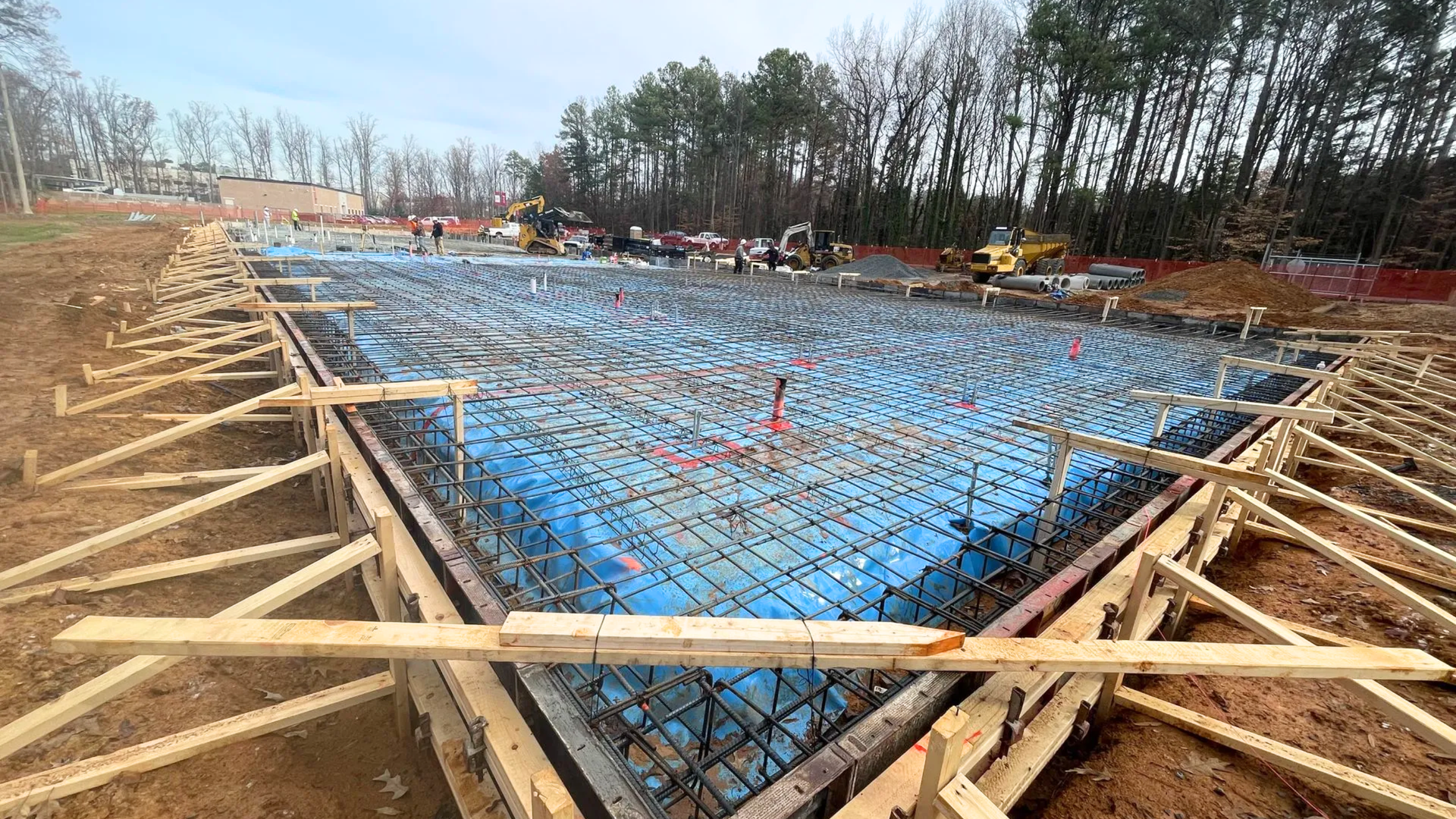
In Chesterfield, soil conditions, drainage patterns, and load requirements all play a role in how foundations should be designed and built. This guide explains how concrete foundations and footings work, what options are available, how installation decisions affect performance, and what property owners should understand before starting a project.
What Foundations and Footings Do
Foundations and footings work together to transfer the weight of a structure safely into the ground.
Footings spread the load of walls, columns, or slabs over a larger area of soil. Foundations sit on top of footings and provide a stable base for the structure itself.
If either component is undersized, poorly prepared, or improperly reinforced, the entire structure can shift or settle unevenly.
For both residential and commercial properties, proper foundation work helps prevent:
- Cracking walls and ceilings
- Uneven floors
- Doors and windows that stick
- Water intrusion
- Long-term structural movement
Soil and Ground Conditions in Chesterfield
Chesterfield properties often include clay-based soils, mixed fill areas, and varying drainage conditions. These factors influence how footings and foundations should be designed.
Clay soils expand when wet and shrink when dry. Over time, this movement can place stress on foundations if they are not properly sized or supported. Areas with poor drainage or sloped lots add additional pressure.
Because of this, foundation work in Chesterfield requires careful planning rather than one-size-fits-all construction.
Types of Concrete Footings
Footings are selected based on load requirements, soil conditions, and the type of structure being built.
Spread Footings
Spread footings are the most common option for residential homes and light commercial buildings. They distribute weight over a wider area and are typically used beneath foundation walls or columns.
They work well for single-family homes, additions, garages, and small commercial buildings.
Continuous Footings
Continuous footings run beneath load-bearing walls and support the entire length of the wall. They are commonly used for basements, crawl spaces, and slab-on-grade foundations.
These footings provide consistent support and help prevent uneven settlement.
Isolated Footings
Isolated footings support individual columns or posts. They are often used for porches, decks, carports, and some commercial structures.
Proper sizing and placement are critical to prevent point-load failure.
Types of Concrete Foundations
The foundation type affects cost, durability, maintenance, and long-term performance.
Slab-on-Grade Foundations
Slab foundations consist of a concrete slab poured directly on prepared soil, with thickened edges that act as footings.
They are common for:
- Single-story homes
- Garages
- Additions
- Many commercial buildings
Slabs are cost-effective and low maintenance, but proper base preparation and drainage are critical.
Crawl Space Foundations
Crawl space foundations elevate the structure above ground level. They provide access to plumbing and utilities while improving ventilation.
They are often chosen for homes in areas with drainage concerns or uneven terrain.
Basement Foundations
Basements provide additional living or storage space but require deeper excavation, stronger walls, and proper waterproofing.
Basement foundations must account for soil pressure, moisture control, and long-term drainage.
Residential vs Commercial Foundation Requirements
While the basic principles are the same, commercial foundations often require:
- Thicker footings
- Higher concrete strength
- More reinforcement
- Engineered drawings
- Inspection coordination
Many homeowners encounter similar requirements when building large homes, multi-family properties, or structural additions.
The same construction standards used on commercial sites often benefit residential projects that need added durability.
Related service: Commercial Concrete Services in Chesterfield VA
Concrete Strength and Reinforcement
Concrete foundations are not just about thickness. Strength and reinforcement matter just as much.
Concrete Strength
Concrete strength is measured in PSI. Most residential foundations use lower PSI than commercial structures, but both must match the load they support.
Using the correct mix reduces cracking and improves long-term stability.
Reinforcement Options
Reinforcement helps control cracking and adds tensile strength.
Common reinforcement includes:
- Steel rebar
- Wire mesh
- Reinforced footing cages
Reinforcement placement must follow proper spacing and coverage requirements to work effectively.
Importance of Site Preparation
Even the best foundation design can fail if the site is not prepared correctly.
Site preparation includes:
- Excavation to proper depth
- Removal of unsuitable soil
- Compaction of the subgrade
- Installation of gravel base
- Drainage planning
Skipping or rushing this step often leads to settlement problems years later.
Related service: Site Preparation
Drainage and Water Management
Water is one of the biggest threats to foundation stability.
Proper drainage helps prevent:
- Soil erosion
- Hydrostatic pressure
- Water intrusion
- Freeze-thaw damage
Drainage solutions may include grading adjustments, drain tile systems, gravel backfill, or surface water control.
In Chesterfield, drainage planning is essential for both slab and basement foundations.
Foundation Installation Process
Understanding the installation process helps property owners set realistic expectations.
1. Evaluation and Planning
The contractor reviews soil conditions, building plans, and site layout. For larger projects, coordination with engineers may be required.
2. Excavation
The site is excavated to the required depth for footings and foundation walls.
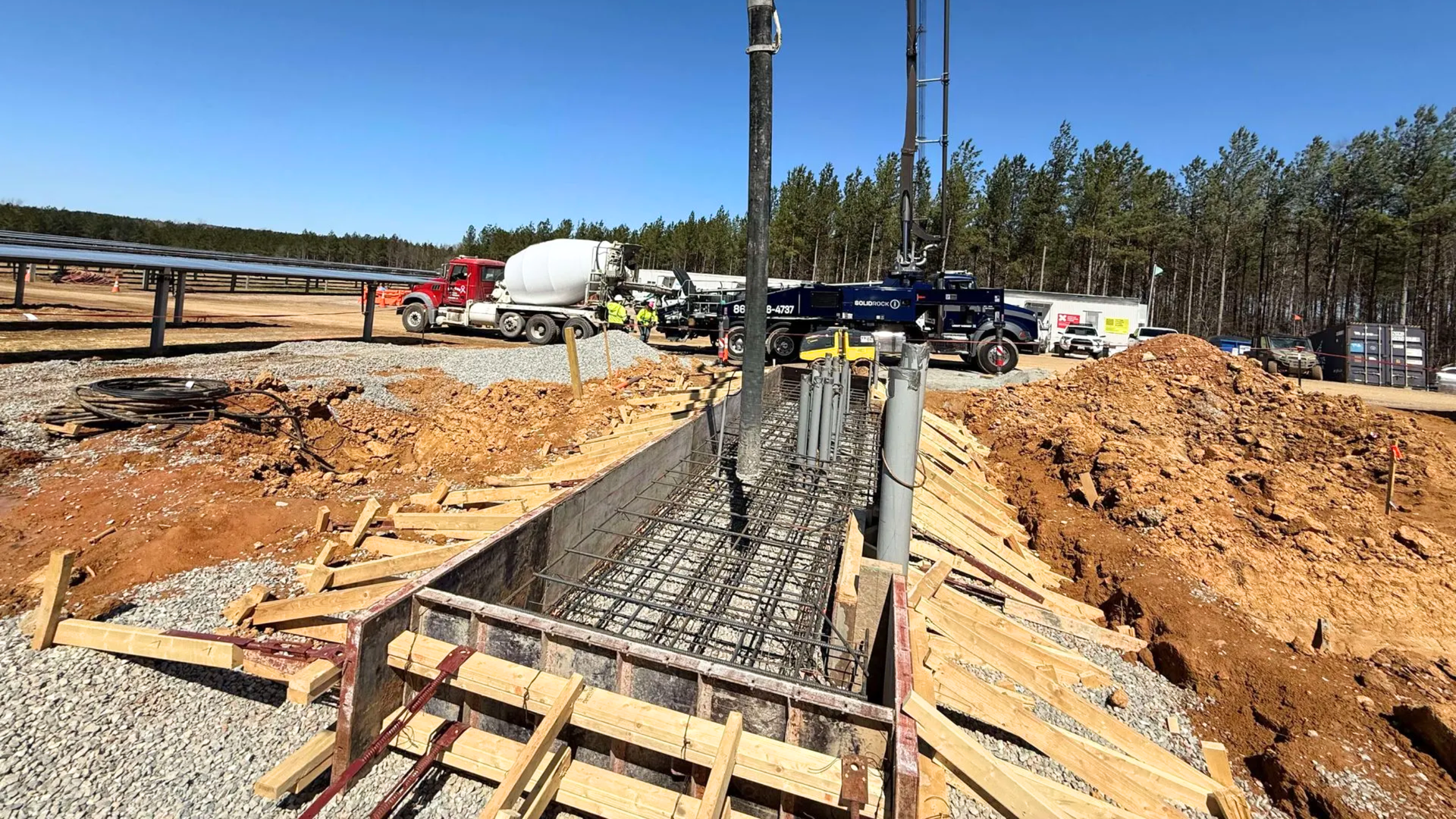
3. Forming and Reinforcement
Forms define the shape of footings and foundation walls. Reinforcement is installed according to design requirements.
4. Concrete Placement
Concrete is poured and carefully consolidated to avoid voids.
5. Curing
Concrete cures over time and gains strength gradually. Proper curing improves durability and reduces surface defects.
6. Backfilling
Once the concrete reaches sufficient strength, backfilling is completed with suitable material.
Foundation Thickness and Depth Guidelines
The table below provides general guidance. Actual requirements depend on site conditions and structure type.
| Structure Type | Typical Footing Depth | Typical Foundation Thickness |
|---|---|---|
| Single-family home | 12–18 inches | 8–10 inches |
| Garage or addition | 12–16 inches | 6–8 inches |
| Light commercial | 18–24 inches | 10–12 inches |
| Heavy load areas | Engineered | Engineered |
These ranges are typical but should always be confirmed for the specific project.
Foundation Repairs vs Replacement
Some foundation issues can be repaired, while others require replacement or structural reinforcement.
Repair may be appropriate when:
- Cracks are minor and stable
- Settlement is limited
- Drainage issues are correctable
Replacement or reinforcement may be needed when:
- Settlement is ongoing
- Structural movement is significant
- Load requirements have increased
In some cases, Underpinning may be used to stabilize existing foundations without full replacement.
Maintenance Considerations for Foundations
Foundations require less maintenance than surface concrete, but periodic checks help prevent problems.
Property owners should watch for:
- New or widening cracks
- Water intrusion
- Soil erosion near foundation edges
- Changes in door or window alignment
Addressing small issues early prevents larger structural repairs later.
Cost Factors for Foundations and Footings
Foundation costs vary widely based on scope and site conditions.
Key cost factors include:
- Foundation type
- Excavation depth
- Soil conditions
- Reinforcement needs
- Drainage solutions
- Access and site constraints
Rather than focusing only on upfront cost, property owners should consider long-term performance and risk reduction.
Why Proper Foundations Protect Property Value
A well-built foundation protects:
- Structural integrity
- Resale value
- Insurance eligibility
- Long-term maintenance costs
Buyers and inspectors pay close attention to foundation quality. Investing in proper construction reduces future complications.
Why Property Owners Choose JM Concrete & Construction
JM Concrete & Construction provides foundation and footing work for residential and commercial properties throughout Chesterfield.
Property owners value:
- Knowledge of local soil conditions
- Careful planning and preparation
- Strong reinforcement practices
- Clear communication throughout the project
- Reliable timelines
Learn more about our experience on About Us or explore our full range of Concrete Services.
FAQs About Concrete Foundations and Footings
How long does foundation installation take?
- Most residential foundations take several days to complete. Larger or more complex projects may take longer depending on excavation and curing requirements.
Can foundations be built in cold weather?
- Yes, with proper planning and protection. Cold-weather placement requires temperature control and curing precautions.
Do foundations always need engineering?
- Not always. Simple residential projects may not require engineering, while commercial or high-load projects typically do.
Do you provide estimates?
- Yes. JM Concrete & Construction provides site evaluations and estimates for foundation and footing projects. Contact us through Contact JM Concrete & Construction to schedule a consultation.
Planning a Foundation Project in Chesterfield
Whether you are building a home, adding onto an existing structure, or developing a property, proper foundation and footing construction is essential.
Working with a contractor who understands Chesterfield soil conditions and site requirements helps ensure long-term stability and performance.
Contact us to request a free estimate. JM Concrete & Construction provides professional foundation and footing services for residential and commercial properties throughout Chesterfield and surrounding areas.