Commercial Concrete Flatwork in Chesterfield, VA: Uses, Requirements, and Installation Process
Commercial concrete flatwork is a critical component of how business properties function every day. From access lanes and loading zones to equipment pads and pedestrian walkways, flat concrete surfaces support vehicle traffic, foot traffic, and operational efficiency across commercial and industrial sites.
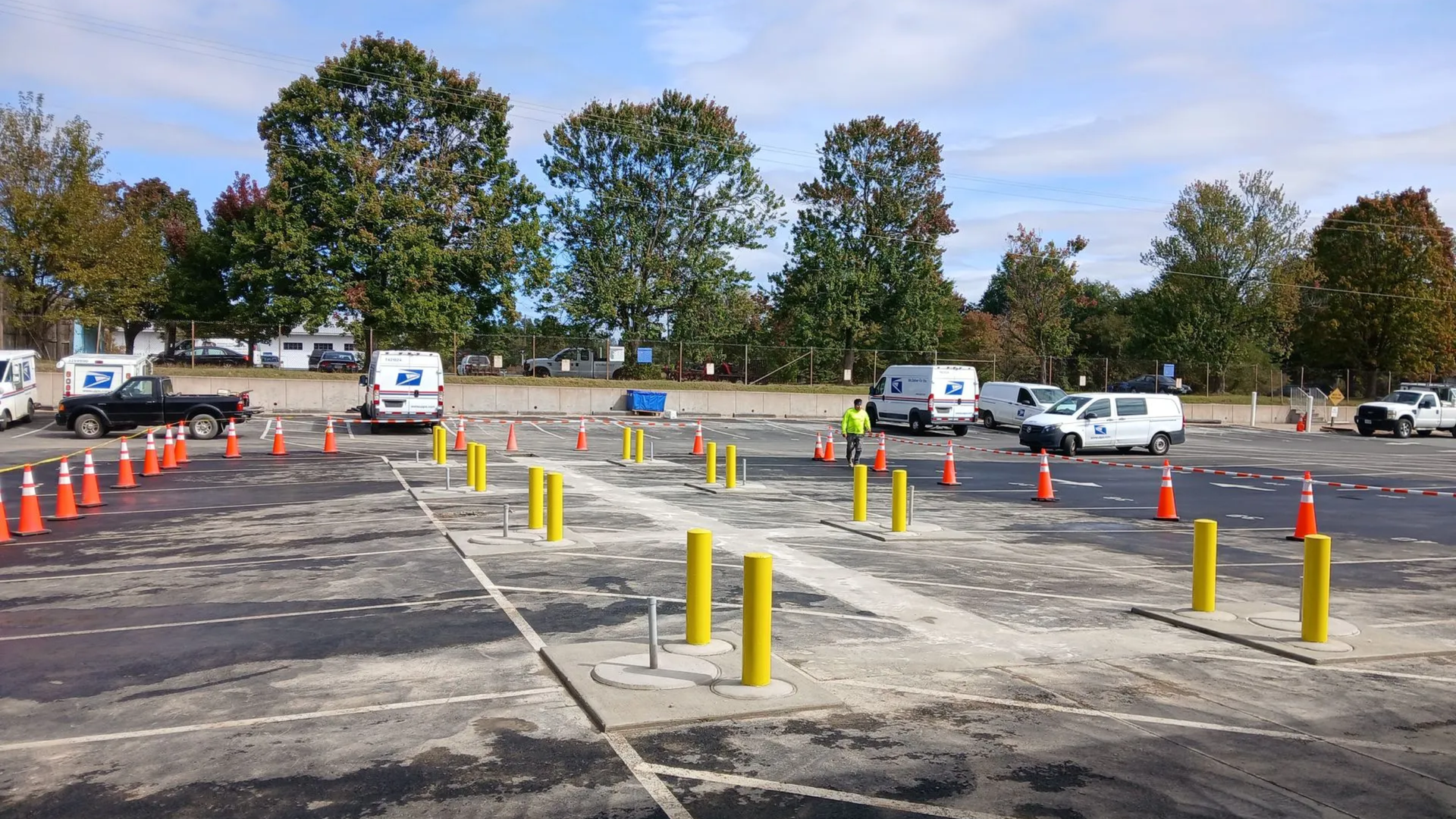
JM Concrete & Construction provides commercial concrete flatwork services throughout Chesterfield, Virginia, working with business owners, developers, builders, and property managers who require durable, well-planned concrete solutions. While flatwork is commonly associated with commercial projects, many of the same standards also apply to larger residential properties and multi-vehicle access areas.
This guide explains what commercial concrete flatwork is, where it is used, how it is installed, and why professional planning and execution matter for long-term performance.
What Is Commercial Concrete Flatwork
Commercial concrete flatwork refers to poured concrete surfaces that are installed horizontally and designed to support regular use in business or industrial environments. Unlike decorative or structural vertical elements, flatwork focuses on functionality, durability, and safety.
These surfaces are engineered to handle heavier loads, higher traffic volumes, and longer service life expectations than standard residential flatwork.
Common examples of commercial flatwork include:
- Drive lanes and access routes
- Parking and service areas
- Loading and unloading zones
- Equipment and generator pads
- Warehouse and industrial slabs
- Pedestrian walkways and ramps
Commercial flatwork must meet higher performance standards due to vehicle weight, operational demands, and safety considerations.
Common Applications for Commercial Concrete Flatwork
Commercial flatwork is used across many industries and property types in Chesterfield.
Access Drives and Drive Lanes
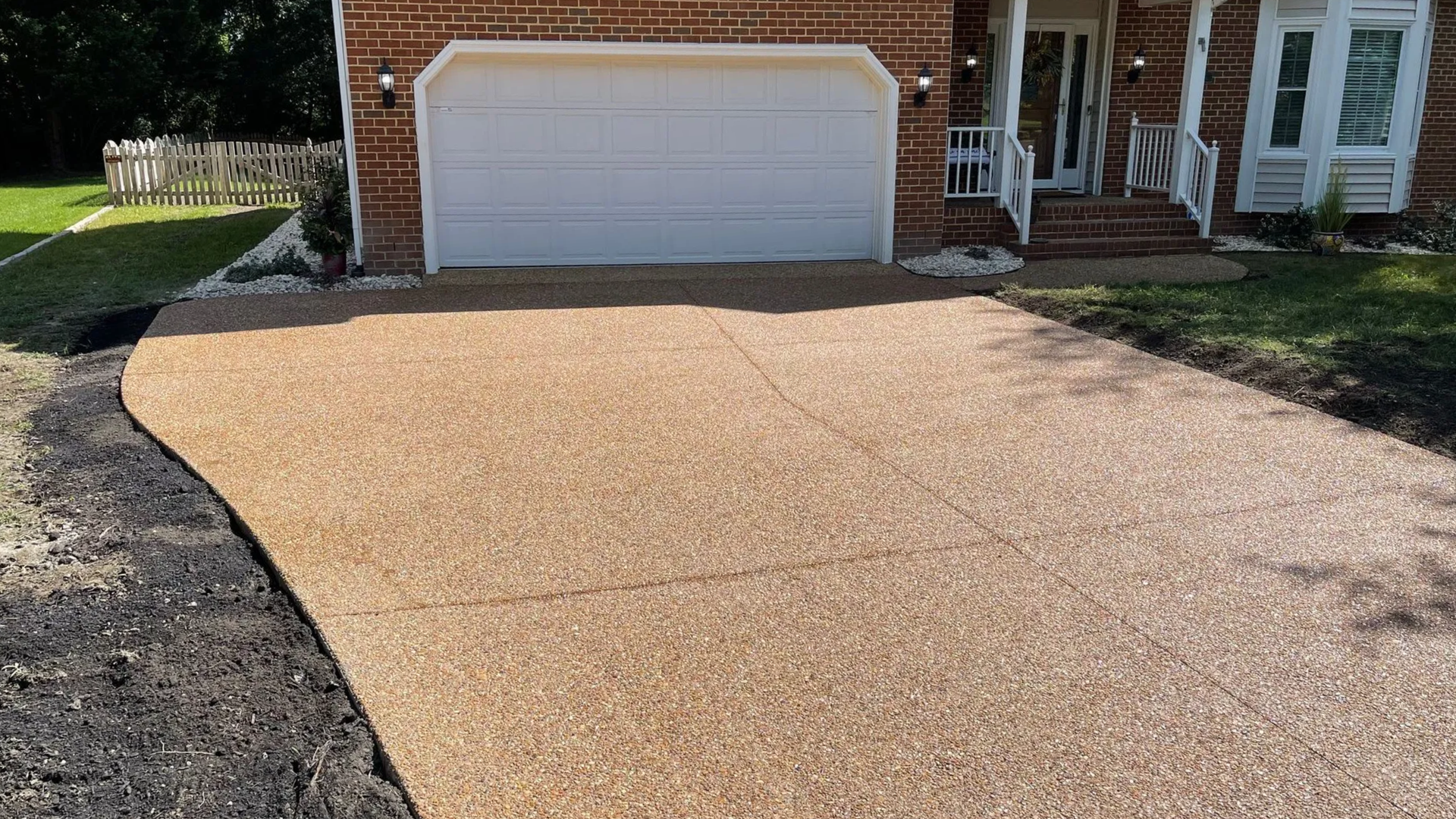
Concrete access drives provide durable entry and exit points for businesses, warehouses, medical facilities, and service centers. These areas often experience repeated traffic from delivery trucks, service vehicles, and employees throughout the day.
Concrete is preferred because it resists rutting, softening, and surface deformation that can occur with other materials.
Related service: Concrete Driveways in Chesterfield VA
Parking and Service Areas
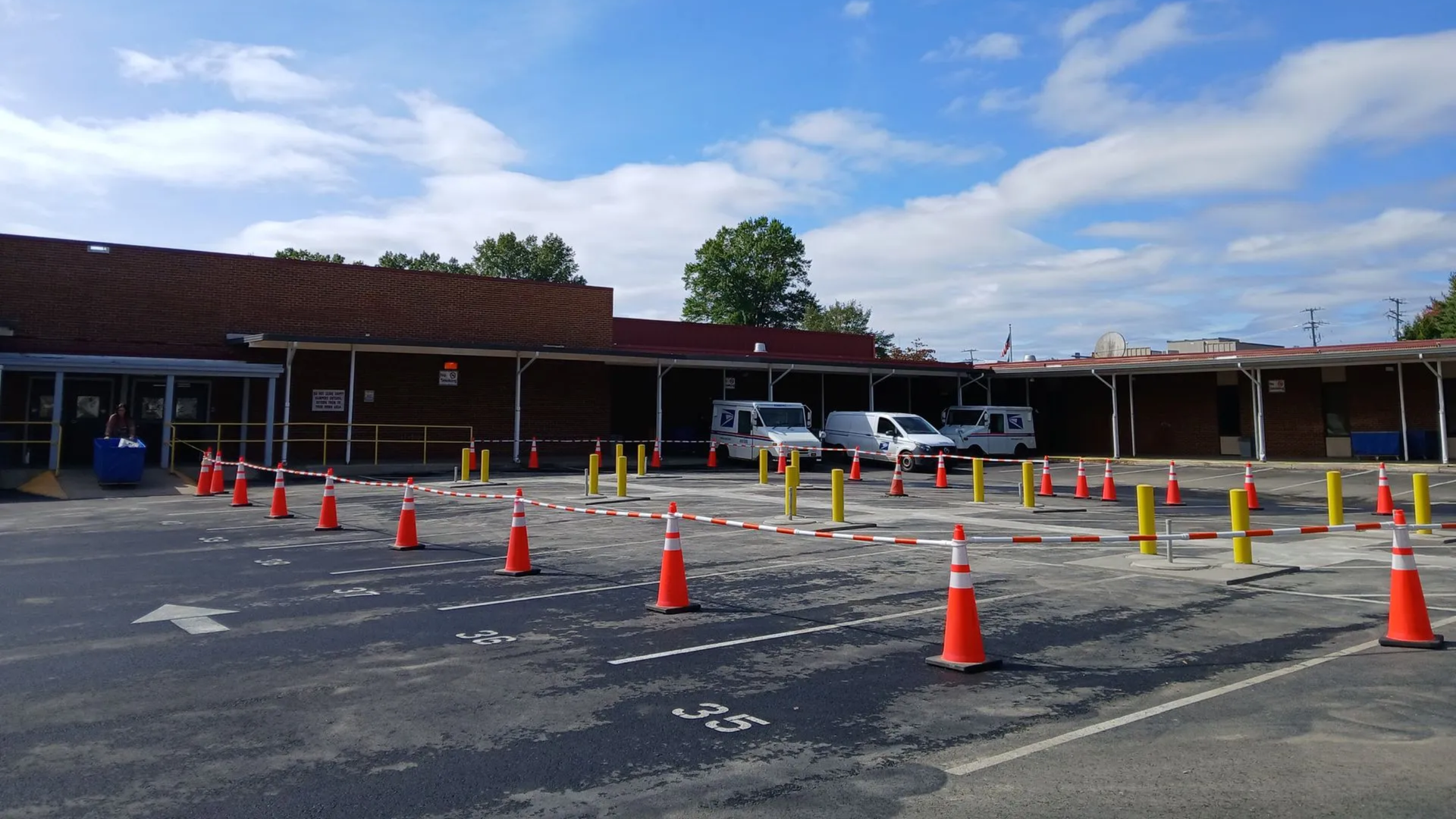
Parking areas and service zones must support a mix of passenger vehicles and heavier commercial traffic. Proper slab thickness, reinforcement, and drainage help prevent cracking and surface failure over time.
Commercial parking flatwork also contributes to a clean and professional appearance for customers and tenants.
Loading Zones and Service Courts
Loading zones experience some of the highest stress on a commercial site. Delivery trucks, forklifts, and repeated loading cycles require flatwork that is engineered for strength and long-term use.
These areas often require increased slab thickness, reinforced edges, and careful joint placement.
Equipment Pads
Concrete equipment pads provide stable, level surfaces for mechanical systems, generators, HVAC units, and other operational equipment. Proper pad construction helps protect equipment and maintain alignment.
Equipment pads are commonly installed as part of broader commercial flatwork projects.
Warehouse and Industrial Slabs
Industrial slabs must handle continuous use from forklifts, pallet jacks, and storage systems. These slabs often require precise finishing and reinforcement to meet operational and safety requirements.
Warehouse flatwork benefits from careful planning during the site preparation phase.
Related service: Site Preparation
Commercial Walkways and Pedestrian Areas
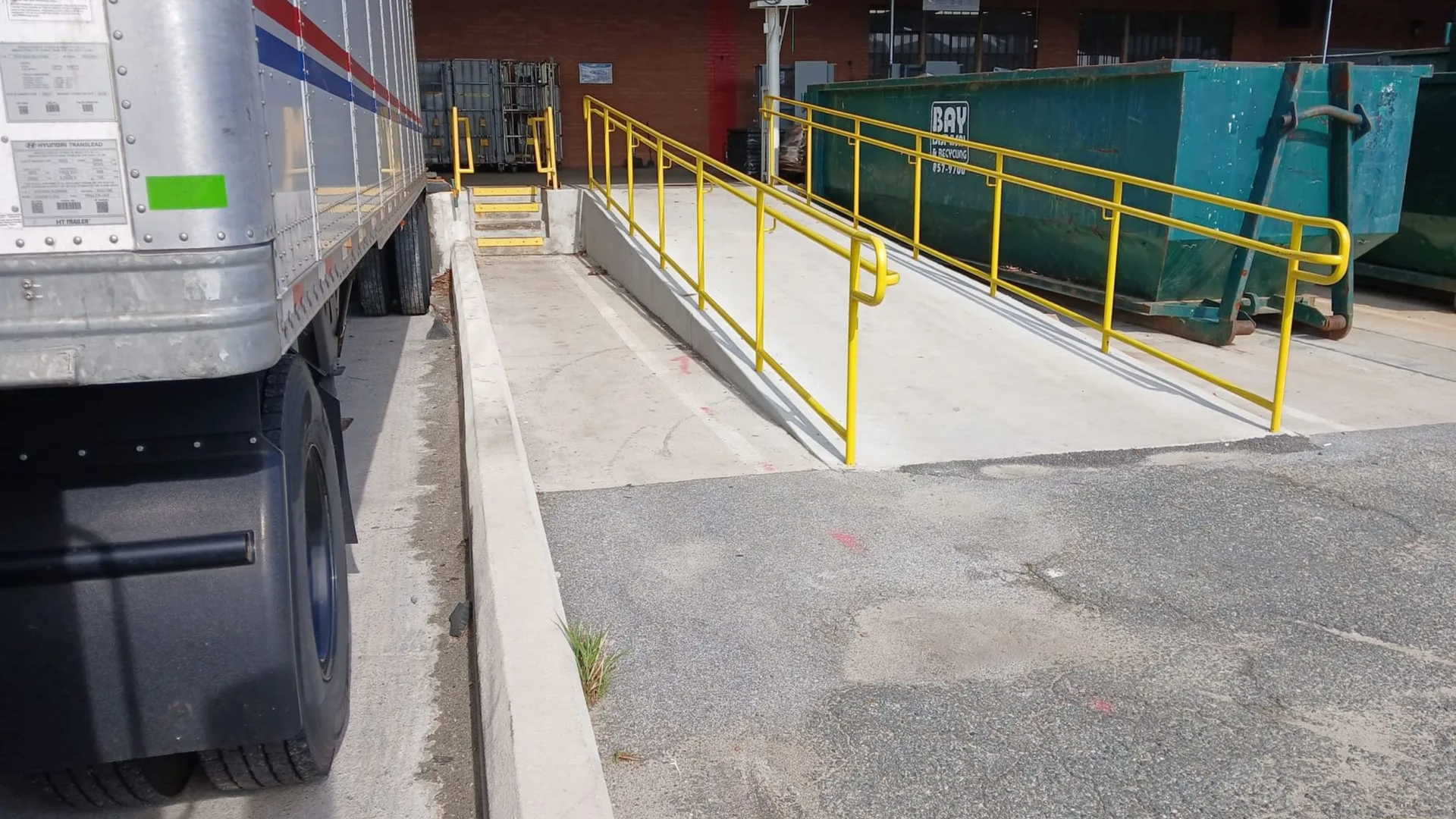
Concrete flatwork is also used for pedestrian access, including walkways, ramps, and service paths. These areas must meet safety and accessibility standards while maintaining durability.
Related service: Concrete Walkways and Sidewalks
Key Requirements for Commercial Concrete Flatwork
Commercial flatwork must meet higher technical standards than residential installations. Proper planning and execution help ensure long-term performance.
Slab Thickness
Commercial flatwork typically requires thicker slabs than residential concrete. Thickness depends on expected loads and usage.
- Light commercial traffic may require five inches
- Heavy vehicle areas may require six inches or more
Reinforcement
Reinforcement adds strength and helps control cracking. Common reinforcement methods include:
- Steel rebar
- Wire mesh
- Fiber reinforcement
The type and placement depend on load requirements and engineering specifications.
Base Preparation
A well-compacted base is essential for flatwork longevity. Improper base preparation can lead to settlement, cracking, and surface failure.
Gravel depth, compaction, and moisture control all contribute to slab stability.
Drainage Planning
Water management is critical for commercial sites. Poor drainage can weaken the subgrade and shorten the lifespan of flatwork.
Proper grading and drainage features help direct water away from concrete surfaces and nearby structures.
Surface Finishing
Commercial flatwork typically uses functional finishes such as broom finish or light texture for traction. In some cases, decorative finishes may be used for entry areas or mixed-use developments.
Finish selection impacts safety, appearance, and maintenance needs.
Commercial Concrete Flatwork Installation Process
Professional flatwork installation follows a structured process designed to deliver consistent results.
1. Site Evaluation and Planning
The process begins with evaluating soil conditions, traffic patterns, drainage needs, and access requirements. Commercial projects often require coordination with engineers or inspectors.
2. Excavation and Grading
The site is excavated to the required depth and graded to support proper drainage and slab thickness.
This phase is critical for long-term performance.
3. Base Installation and Compaction
A gravel base is installed and compacted to provide a stable foundation. Proper compaction helps prevent settling and cracking.
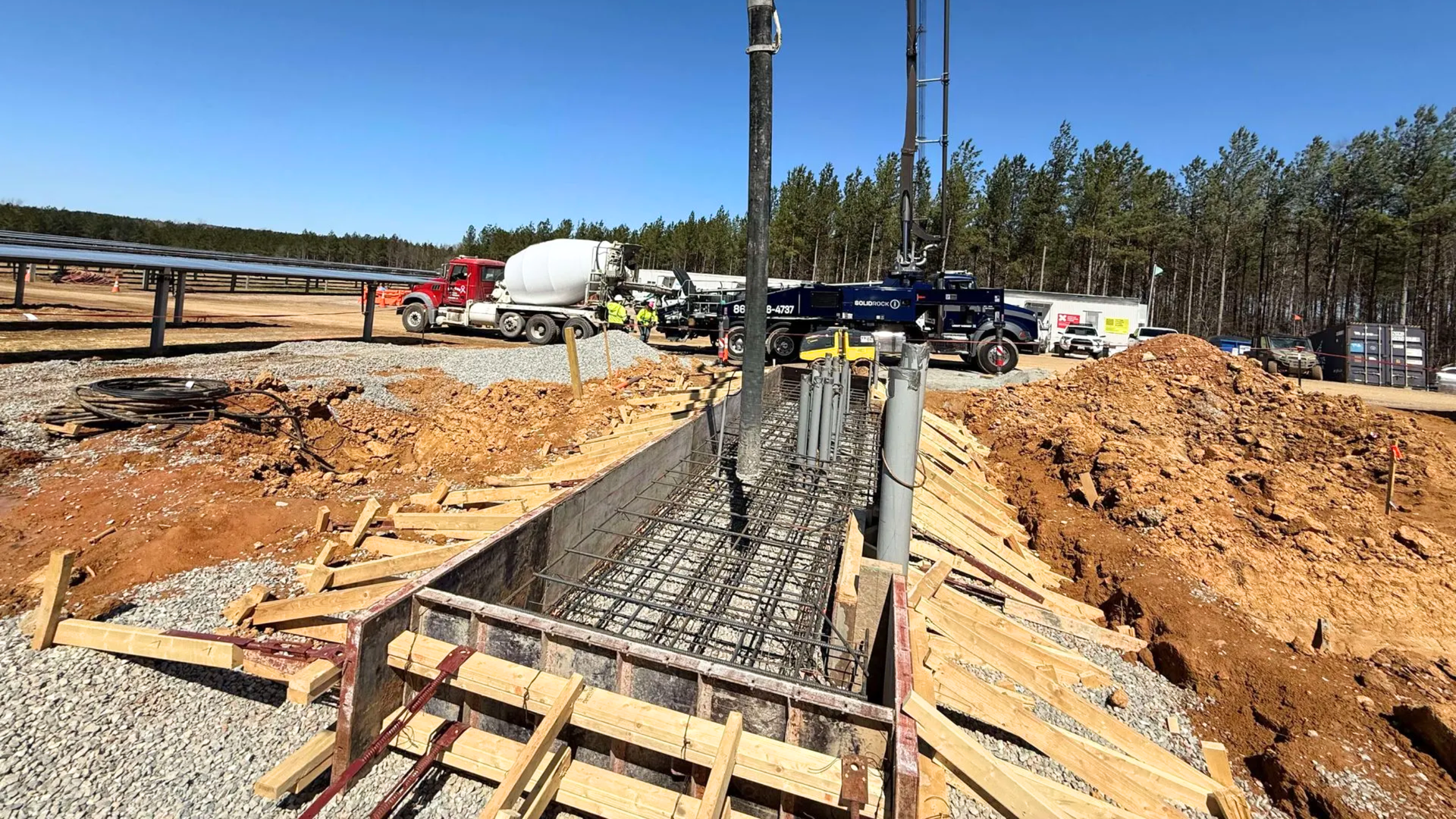
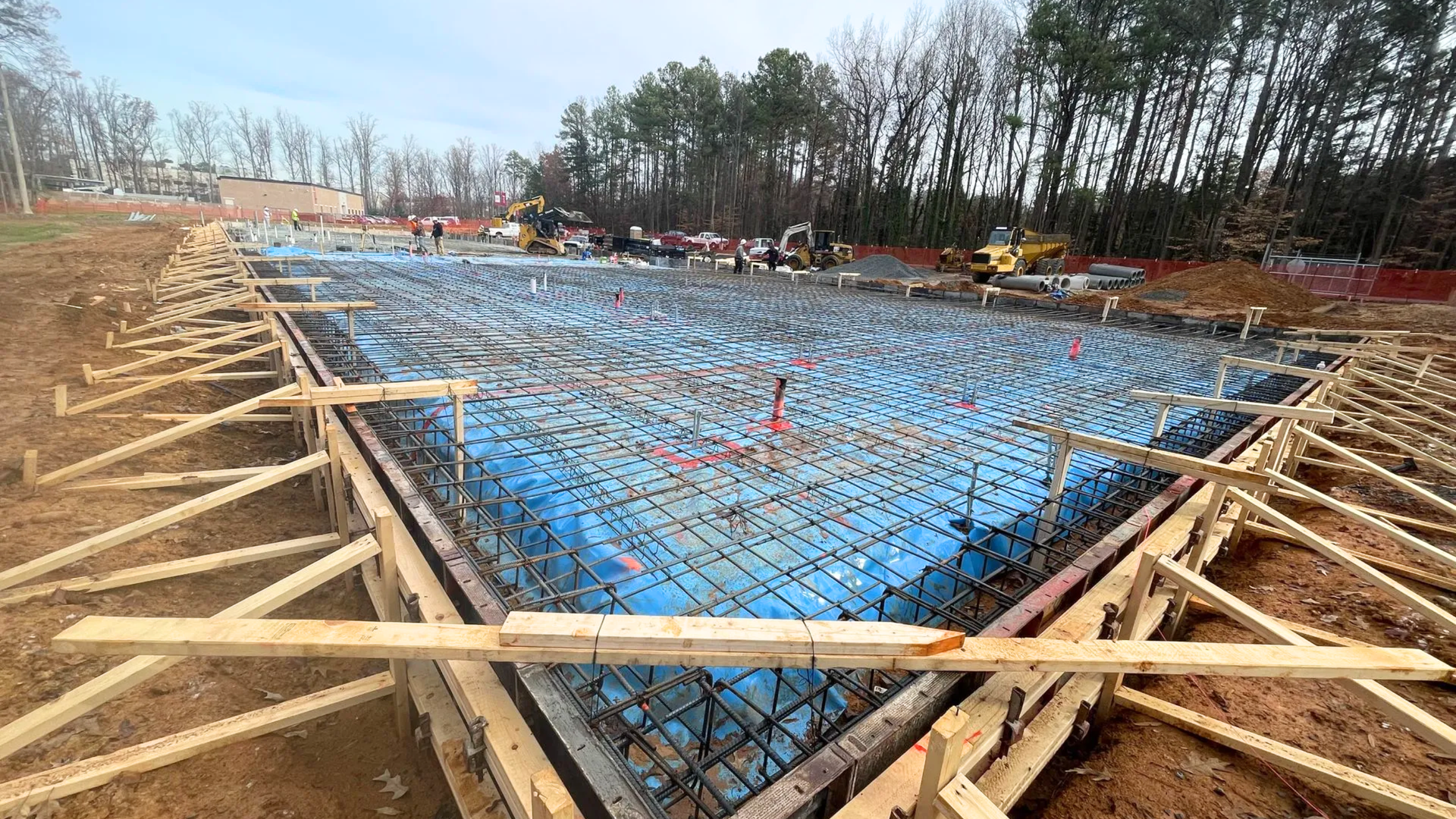
4. Forming and Reinforcement
Forms define the slab layout and elevation. Reinforcement is placed according to project requirements.
This step ensures the slab can support expected loads.
5. Concrete Placement
Concrete is poured, spread, and leveled. Professional crews work efficiently to maintain consistency and proper finishing.
6. Finishing
The surface is finished based on the intended use. Broom finishes are common for traction, while smooth or specialty finishes may be used in select areas.
7. Curing
Concrete cures over time to reach full strength. Controlled curing improves durability and surface performance.
Light traffic may be allowed after several days, while full load capacity is reached after approximately twenty-eight days.
Cost Factors for Commercial Concrete Flatwork
Commercial flatwork costs vary based on project complexity and site conditions. Rather than fixed pricing, costs are influenced by several variables.
Key cost factors include:
- Total square footage
- Slab thickness
- Reinforcement requirements
- Site access and logistics
- Drainage needs
- Scheduling and phasing
- Engineering specifications
JM Concrete & Construction provides clear estimates that reflect actual project needs and scope.
Maintenance and Longevity of Commercial Flatwork
Concrete flatwork is durable, but regular maintenance helps extend service life and preserve appearance.
Recommended maintenance practices:
- Periodic sealing
- Prompt cleaning of spills
- Monitoring drainage and runoff
- Repairing minor cracks early
- Protecting slab edges from erosion
With proper installation and care, commercial flatwork can perform reliably for decades.
Why Professional Commercial Flatwork Matters
Improper flatwork installation can lead to safety issues, costly repairs, and operational disruption. Commercial sites require flatwork that meets performance, safety, and compliance expectations.
Professional installation ensures:
- Correct load capacity
- Consistent surface quality
- Proper drainage
- Long-term durability
- Reduced maintenance costs
JM Concrete & Construction applies commercial-grade standards to every project.
Why Choose JM Concrete & Construction
JM Concrete & Construction works with commercial clients across Chesterfield who need dependable concrete solutions.
Clients value:
- Experience with commercial flatwork projects
- Knowledge of local soil and site conditions
- Careful coordination with other trades
- Clear communication throughout the project
- Professional scheduling and execution
Learn more about our company on About Us or explore our full range of Concrete Services.
FAQs About Commercial Concrete Flatwork
How long does commercial flatwork installation take?
- Most projects take several days to complete, depending on size and complexity.
Can flatwork be phased to keep operations open?
- Yes. Many commercial projects are completed in phases to maintain access and minimize disruption.
When can vehicles use new flatwork?
- Light traffic may be allowed after several days. Full load capacity is reached after curing is complete.
Do you handle demolition and site preparation?
- Yes. JM Concrete & Construction manages demolition, excavation, and preparation as part of the project. Contact us through Contact JM Concrete & Construction to discuss your project.
Request a Commercial Concrete Flatwork Estimate in Chesterfield, VA
Whether you are building a new facility, upgrading an existing site, or improving access and service areas, JM Concrete & Construction provides commercial concrete flatwork designed for long-term performance.
Reach out today to request an estimate and discuss your project needs.